Download - Anora.2024.hindi.english.web-dl.480... ⚡ Trusted Source
The world’s most comprehensive materials database
Total Materia is a product of Key to Metals AG
Total Materia is a product of Key to Metals AG
If "Anora" is a work worth engaging with, then seeing it — however we can — is the beginning. From there, the fuller conversation can follow: about craft, context and the conditions that shaped its journey from idea to file name, and from file name to the small, luminous moment when a viewer presses play.
Consider what is lost and what is gained. A compressed release can spread a film wider, allowing viewers in varied geographies and with differing connection speeds to encounter work they otherwise might never see. For many, these versions are entry points — first glances that might lead to festival screenings, director interviews, or pursuing a higher-quality release. Yet the reduction in image detail and dynamic range can also dull cinematographic subtleties: a nuanced shadow, a deliberate frame, a tonal shift in color that a filmmaker labored over may become a whisper rather than a voice.
There’s also an ethical and cultural dimension. File names like this one sit at the intersection of access and authorship. When a film travels as a clipped download, questions arise about curation, consent and compensation. Who benefits from its circulation? How does the version in circulation represent the artist’s intent? These are not merely industry talking points — they matter to audiences who deserve context for what they watch and to creators whose reputations depend on how their work is seen. Download - Anora.2024.Hindi.English.Web-DL.480...
And yet, for viewers, a download like "Anora.2024.Hindi.English.Web-DL.480" can also be an intimate, transformative artifact: an after-midnight discovery, a shared file traded among friends, a subtitled revelation that sparks conversations about identity, language and belonging. The imperfections of a lower-resolution file can even contribute to a film’s mythos — the way grain or compression artifacts once added a romantic roughness to VHS-era favorites.
Ultimately, the file name is a signpost to a larger cultural economy of stories. It tells us where the film sits in distribution ecosystems, hints at its linguistic reach, and signals the mode in which many people will first encounter it. More importantly, it reminds us that films are living things once released: they circulate, get discovered in imperfect formats, and generate meaning in ways both intended and accidental. If "Anora" is a work worth engaging with,
Anora, as a name, suggests intimacy and mystery. The year anchors us: 2024, a time when storytelling is both liberated and burdened by the multiplicity of platforms and formats. The dual-language note — Hindi.English — is itself a small manifesto. It speaks to hybridity: films no longer exist for single markets alone but for diasporas, bilingual households, festival streams and algorithmic recommendations. Language becomes a bridge, a badge of accessibility and ambition.
There’s a brittle poetry to the way films arrive in the world now: a title, a year, a handful of tags and a file name that promises a viewing. "Anora.2024.Hindi.English.Web-DL.480…" reads like a catalog entry and a promise at once — a denatured invitation to experience a story whose contours are teased out in two languages, compressed for screens both small and large. A compressed release can spread a film wider,
"Web-DL" signals distribution choices. It maps a film’s journey from an online platform to a viewer’s device, bypassing traditional theatrical gatekeeping while leaning into the democratizing potential of digital circulation. But the suffix "480" tempers the grandeur with a reminder of limits: lower resolution, modest bandwidth, an economy of pixels translating a possibly rich cinematic texture into a compact file. There is something both practical and poignant about that trade-off. The essential story remains, but its sensory fullness is negotiated.

Send your technical questions to our experts!
Connect you with an EnginSoft expert who can provide a reliable answer to your technical question or recommend a
proven solution.

CASE STUDY
This technical article describes how high-end numerical Computational Fluid Dynamics (CFD) simulations were applied to mimic the realistic operating conditions of a Ventricular Assist Device (VADs) and analyze its hemodynamics in order to identify potential areas for optimization of the device’s performance, safety and efficacy.
ansys cfd biomechanics
CASE STUDY
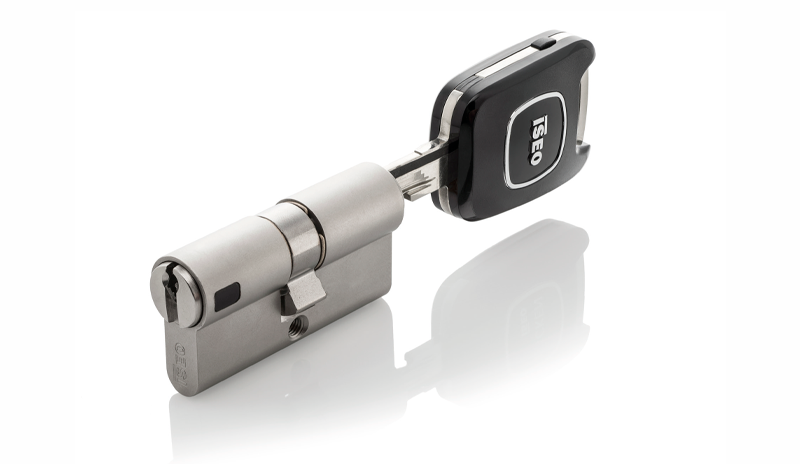
This case study describes ISEO’s project to introduce a global dimensional management approach based on CETOL6σ that starts from the product concept phase and includes design development and prototyping and extends on to cover all other phases of production through to the finished product, with the guidance and support of EnginSoft.
tolerances cetol mechanics

CASE STUDY
This article describes how the company created and tested a process to construct a parametric CAD model capable of providing its designers with a starting point for any new machine to be designed.
mechanics ansys modefrontier maplesim maple
CASE STUDY
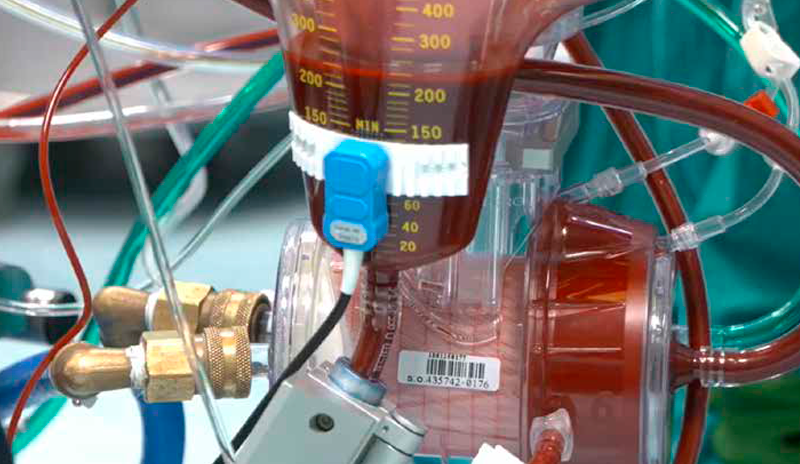
The study described in this article was designed to obtain greater insight into the gas transfer mechanism at microscopic scale using computational fluid dynamics in order to accelerate design exploration to find the optimal solution.
biomechanics ansys

CASE STUDY
Have you ever grappled with the nonlinearity of materials? This article introduces Multiscale.Sim’s curve-fitting feature for predicting material constants for viscoelastic problems.
multiscale mechanics composites
